About Hamble-le-Rice
If you have ever fancied escaping to a quiet corner of Hampshire where the river meets the sea in the most charming way, then Hamble-le-Rice is the place for you. Tucked away on the Hamble peninsula, just south of Southampton, this little village feels like a step back in time while still buzzing with life.
Pretty cottages line the lanes, yachts bob gently on the water, and the air carries that unmistakable salty tang of the Solent. Locals just call it Hamble, and once you visit, you will understand why it has captured hearts for centuries.
The history of Hamble goes back a very long way. The earliest written mention comes from the year 720, when a monk named Saint Willibald set sail from the river here on his pilgrimage. Before that, Iron Age folk had already recognised the spot’s potential, building a hillfort on what is now Hamble Common. The Romans came and went, but it was the Anglo-Saxons who really put down roots. The village name itself probably comes from Old English words meaning something like “ham by the crooked river” or perhaps “estate in the rushes” – the “le-Rice” bit was added later to distinguish it from other Hambles.
In medieval times, Hamble was a busy little port. The river provided a safe haven for ships, and there was even a small priory dedicated to St Andrew, linked to a French abbey. Henry V used the river to gather part of his fleet before heading off to Agincourt in 1415. Fishing and trade kept the village going, and rope-making became a local speciality. You can still sense that maritime heartbeat today.
But the river’s real importance grew over the centuries. By the Victorian era, yachting had taken hold, and sailing clubs started popping up along the banks. The Royal Southern Yacht Club, one of the oldest in the country, traces its roots back to the 1830s. The river became a playground for keen sailors, and that tradition carries on strongly now.
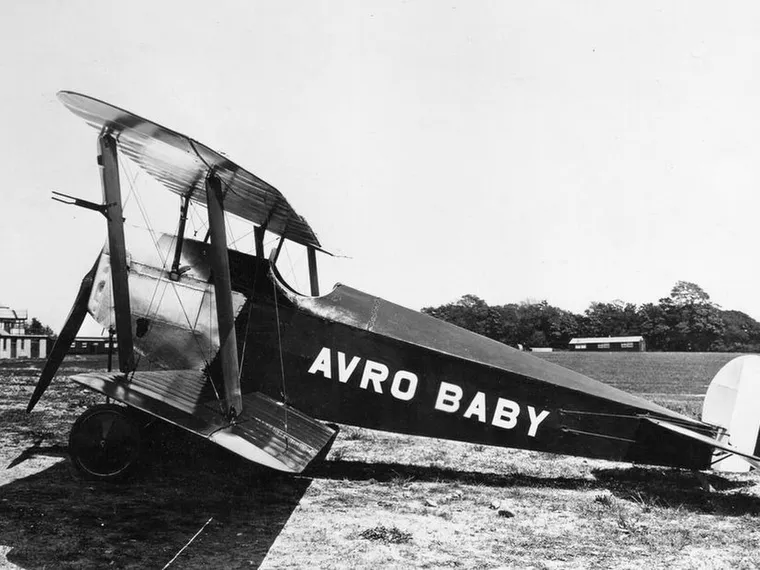
Then came the twentieth century, and Hamble found itself at the centre of something completely different – aviation. During the First World War, A V Roe set up a factory and airfield on the south side of the village to build seaplanes. After the war, the industry grew. In the 1930s and 1940s, companies like Folland Aircraft produced hundreds of planes here, including parts for famous fighters. Hamble became a key training base for pilots, with airfields on both the north and south sides. Spitfires, Lancasters, and Wellingtons all had connections to the village. Women from the Air Transport Auxiliary ferried aircraft from the factories to frontline squadrons. It was a hive of activity, and the legacy lingers in old hangars that have been converted into boat yards.
During the Second World War, American forces prepared for D-Day along the foreshore, and a massive fuel depot was built to supply the invasion. Pipelines snaked under the Channel as part of Operation Pluto. After the war, a college for air training kept the aviation spirit alive into the 1980s. Though the big factories have gone, you can still spot traces of that era if you know where to look.
These days, Hamble is best known for its boating. The river is packed with marinas and moorings, and on a sunny weekend it feels like half the south coast’s yachts have converged here. The village even starred as the fictional Tarrant in the 1980s television series Howards’ Way, which celebrated the glamorous side of yachting life.
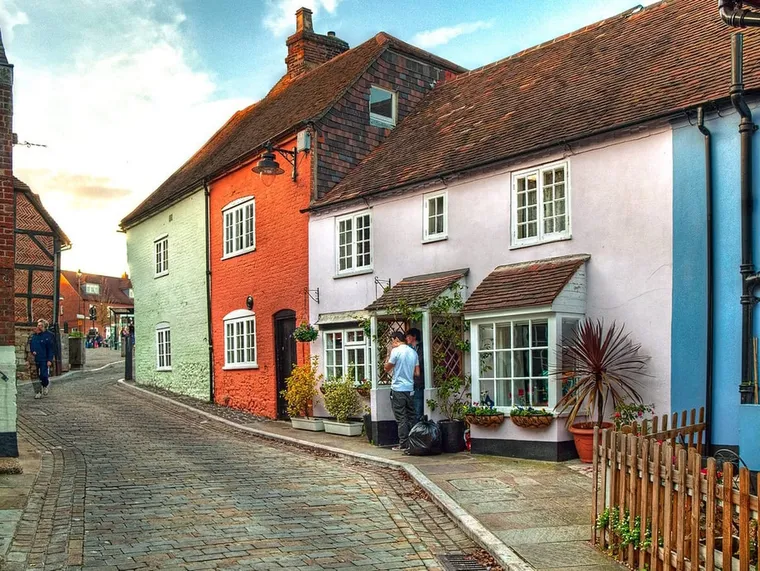
Now, let us talk about what you can actually do when you visit. Start in the village centre, around The Square and the High Street. Narrow lanes wind between pink-washed cottages and old brick buildings, many dating back hundreds of years. It is the sort of place where you can happily wander, popping into independent shops or stopping for a coffee while watching the world go by.
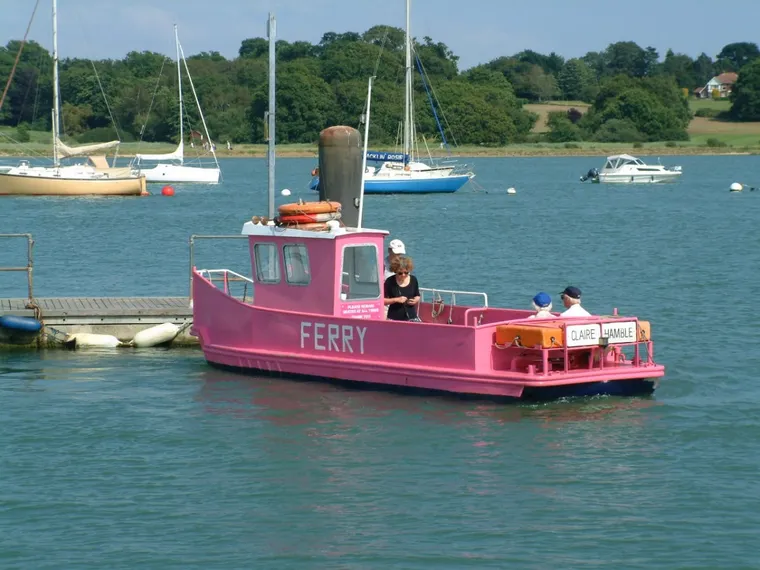
The river itself is the star attraction. Walk along the foreshore path and you will get lovely views across to Warsash on the opposite bank. The path is easy and flat, perfect for a gentle stroll with the water lapping beside you. Keep an eye out for wading birds and the occasional seal. If you fancy crossing the river without a car, hop on the little pink ferry that shuttles between Hamble and Warsash. It has been running for decades and is a delightful way to see the estuary from the water.
Head south to Hamble Common, a wide open space of grassland and shingle beach that juts out into the Solent. On a clear day the views stretch across to the Isle of Wight. It is a brilliant spot for a picnic or just sitting and watching the ships sail by. The common has that ancient hillfort hidden among the gorse, and it is rich in wildlife – butterflies in summer, migratory birds in winter.
Of course, no visit to Hamble is complete without spending time around the marinas. Port Hamble and Hamble Point are full of gleaming boats, and the riverside pubs are perfect for a drink while watching the comings and goings. Places like Ye Olde Whyte Harte have been serving locals and visitors for centuries, with cosy interiors and outdoor tables right by the water.
The village has a handful of good eateries, from traditional pubs to riverside restaurants where you can enjoy fresh seafood while the sun sets over the yachts.
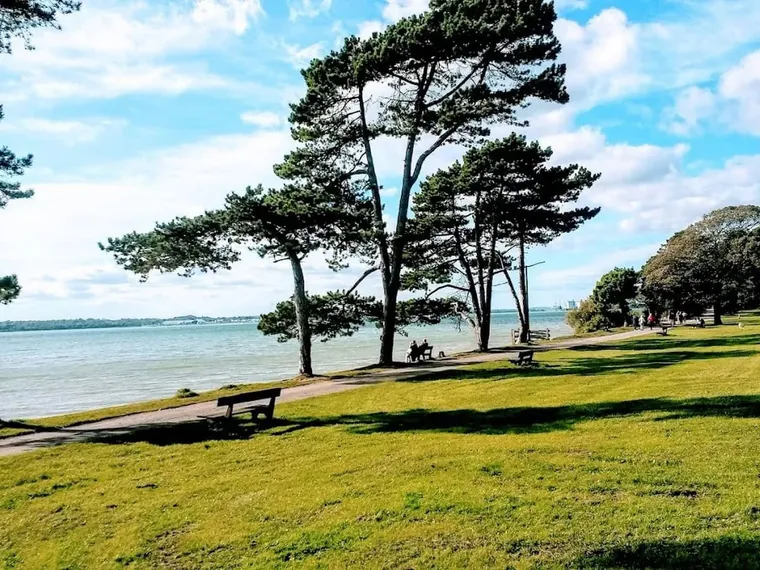
If you want to stretch your legs further, follow the coastal path towards Southampton Water or head upstream along the river towards Bursledon, where there are more boatyards and quiet spots to explore. Nearby, you will find Manor Farm, a lovely country park with historic buildings and farm animals, or the ruins of Netley Abbey just a short drive away. Royal Victoria Country Park, with its vast grounds and seaside chapel, is another easy outing.
Hamble might be small, but it packs in an awful lot. Whether you are drawn by the history, the sailing, the walks, or simply the peaceful atmosphere, it is one of those places that rewards slow exploration. Come for a day, stay for a weekend, and you will probably find yourself planning a return trip before you have even left. This little Hampshire village has a way of getting under your skin.
Further Reading
- Hamble History – Hampshire History
- Early Hamble le Rice – Local Histories
- History of the River Hamble – Hampshire County Council
- Hamble’s incredible aeronautical past – Key.Aero
- Main image – Anguskirk – flickr.com